Sod Seams and Gaps After Installation in Cambridge: What We Check
Visible joins can be part of the appearance of newly laid sod, but open or widening gaps deserve attention. After sod installation, we want adjacent pieces fitted together with suitable soil contact. If edges pull apart, curl or dry, the next step is to review moisture, contact and disturbance rather than assume every seam is harmless.
At Monarch Landscaping, we would rather hear about a changing gap early than have a homeowner try several repairs without knowing the cause. A Cambridge lawn can look different as light, moisture and growth change, so photographs and the pattern across the yard help us understand what needs checking. This guide explains what to observe and how to report it clearly.
Distinguish a visible join from an open gap
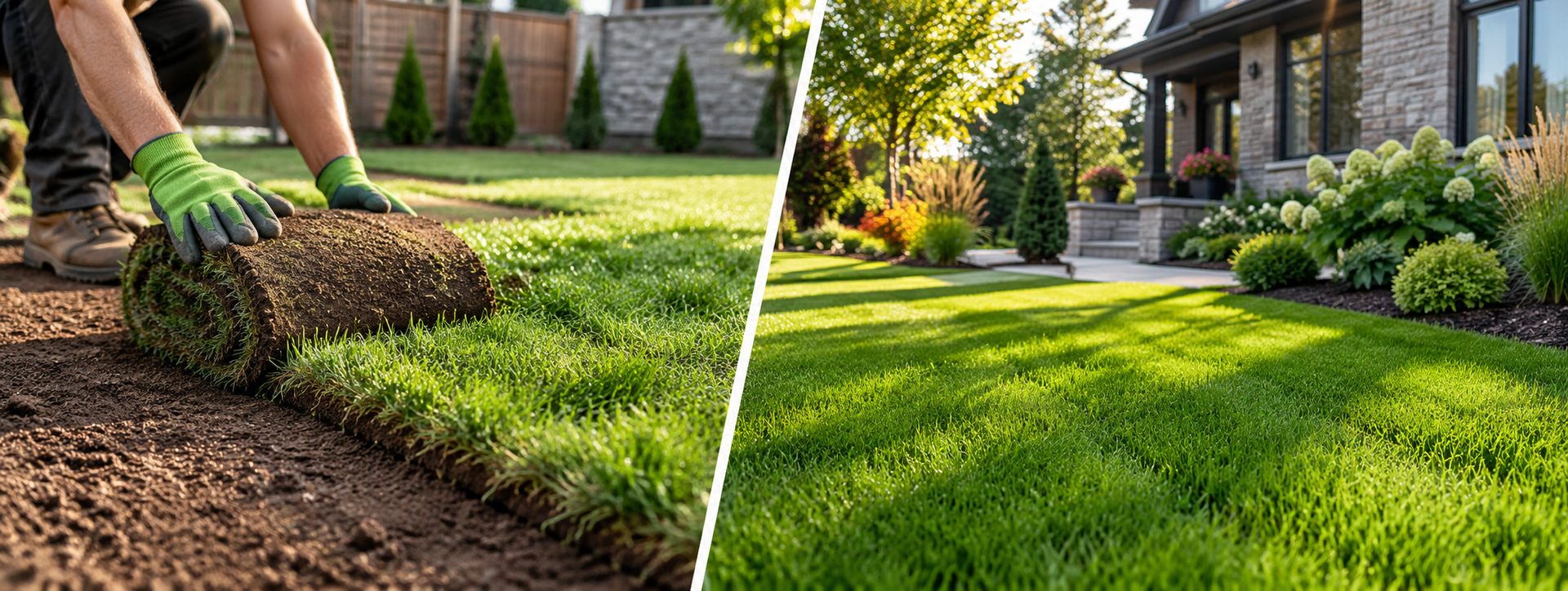
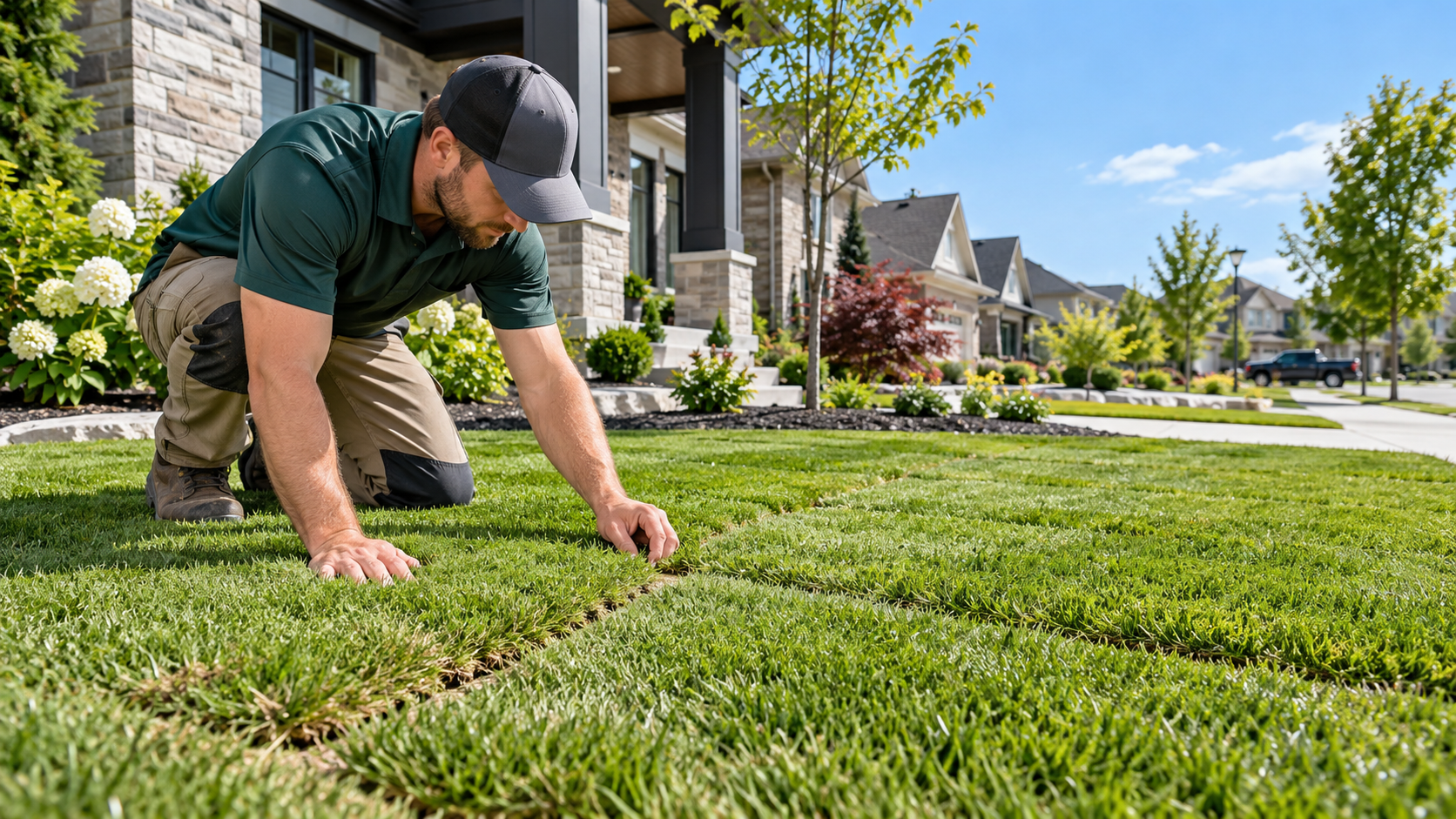
Sod is installed in separate pieces, so the lines between them may remain noticeable at first. A change in blade direction or shade can make the join visible even when the edges meet. That is different from a space exposing soil between pieces.
Look at the join from a normal standing position and, if needed, take a closer photograph without pulling the turf apart. Note whether the pieces touch, whether an edge is raised and whether the line has become wider since installation. Those details are more useful than the word “seam” alone.
We would not promise that every visible line disappears on the same schedule. Growth and establishment depend on conditions. The important distinction is between an appearance that is settling in and a physical gap or change that needs review.
Check the pattern across the lawn
One short gap near a curved bed may have a different explanation from joins opening throughout the yard. Record where the issue occurs and whether it is concentrated beside paving, in exposed areas or along a frequently used route.
A broad photo helps show that pattern. Include a fixed feature such as a path or fence so we can locate the section. Then add a close view of the gap. If you can show scale without stepping on loose turf, include a small familiar object beside the area rather than inserting anything under the sod.
Our Cambridge sod installation service is the starting point for planning and assessment. If we installed the lawn, tell us when you noticed the change and what care or activity has occurred since handover.
Review moisture and drying at the edges
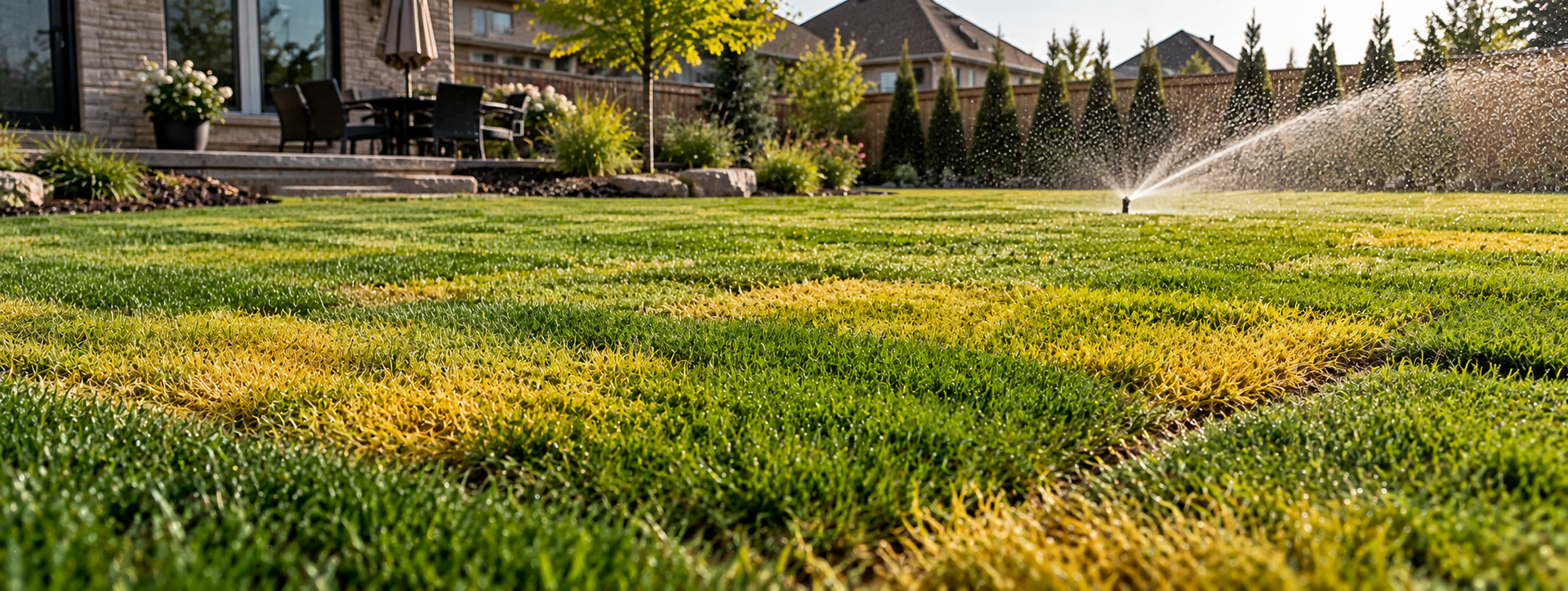
Drying can contribute to shrinkage and stressed edges. A lawn may receive water in the centre while narrow strips beside paving or fences remain less evenly covered. Check the sprinkler pattern and the actual condition of the affected area rather than assume the whole lawn receives the same treatment.
At the same time, do not respond to every gap by adding unlimited water. Saturated ground and runoff do not improve the situation simply because a seam is visible. We need to understand whether the turf and prepared soil are dry, suitably moist or excessively wet.
Avoid judging by colour alone
Grass colour can change for several reasons. A green surface does not prove the soil beneath it has appropriate moisture, and a discoloured edge does not identify the cause by itself. Describe the moisture observations and the physical condition of the join together.
Use the checks described in your aftercare plan, with minimal disturbance. Repeatedly lifting or peeling the same edges can interrupt contact and anchoring. If you are unsure how to inspect the lawn, ask before turning an observation into a repair.
Consider soil contact and surface levels
The underside of the turf needs contact with the prepared growing surface. A raised edge, uneven base or disturbed piece may create a gap beneath part of the sod even when the top looks close to its neighbour. That condition needs assessment.
We would examine whether the problem relates to local fitting, preparation, drying or movement. Those possibilities do not all call for the same response. Pressing, filling or re-laying without understanding the issue can conceal the symptom while leaving the cause.
Our
sod installation options explain why preparation is part of the lawn project. Good finishing depends on the base as well as the visible placement of the rolls. A new surface cannot correct every underlying level or moisture problem by itself.
Look for signs of traffic or movement
Foot traffic, pets, mower wheels and dragged hoses can disturb turf before it anchors. Check whether a gap follows a common walking route or appeared after a particular task. Share that information without assuming it automatically explains everything.
If a piece has clearly shifted, keep further traffic away and contact the installer. Do not pull it forcefully back into position or repeatedly walk over it to flatten the join. The roots and underlying surface need consideration before a correction is made.
The same caution applies to mowing. A lawn may be ready in one section while another remains loose or soft. If edges catch or pieces move under the mower, stop rather than continue across the whole yard.
Do not cover every seam with soil
Adding soil to an open line can sound like a simple fix, but the appropriate response depends on the gap and the condition of the turf. A surface dressing is not a universal solution for pieces that are shrinking, lifted or poorly seated.
Avoid burying healthy grass under a heavy layer. Also avoid pushing unrelated fill, sand or leftover construction soil into the joins without advice. The material and method need to suit the lawn, and some gaps may require a different correction.
Ask before applying seed or fertilizer
Seed does not resolve every contact problem, and fertilizer is not a repair for a physical gap. Product decisions should reflect what has already been applied, the turf condition and the intended result. We would first review the cause.
If a specific repair is recommended, ask how it should be cared for and whether access needs to remain restricted. A small corrected area can still be vulnerable, especially if the original pressure or watering issue continues.
Know what information helps an installer respond
Send the installation date, when the gap first appeared and whether it is changing. Add an overview, a close photo and a description of the watering setup. Mention recent heavy rain, hot dry conditions or activity on the lawn if relevant.
Keep the report factual. “The gap beside the patio widened over three days” is more useful than a firm diagnosis based on an internet photo. We can then ask focused questions or arrange the appropriate review.
If there are agreed follow-up or warranty terms, use the reporting process they describe. Do not assume a blog article changes the contract or creates a guarantee. The aim is prompt communication and a response suited to the actual condition of the lawn.
Support the lawn while the issue is reviewed
Keep normal traffic off loose areas and continue the appropriate aftercare guidance. Avoid experimenting with several fixes at once, because that makes it harder to see what is happening and can create additional disturbance.
Check neighbouring joins as well as the most obvious gap. A repeated pattern may point to a coverage or site issue that a single close-up misses. Photograph changes from the same position where possible so the comparison is meaningful.
Once a correction is agreed, address the contributing routine too. If a sprinkler misses an edge or a dog repeatedly crosses the same strip, the repair needs protection from that pressure. Establishment is a process, and small observations can help prevent a local problem from spreading.
Frequently asked questions
Are visible seams normal immediately after sod installation?
The joins between separate pieces may be visible. An open, widening or lifted gap is different and should be reported. We would review the condition rather than promise that every line will disappear on its own.
Will watering close a gap?
Suitable moisture supports the lawn, but water is not a universal physical repair. The next step depends on whether the gap relates to drying, fitting, contact or disturbance. Avoid saturating the area without assessment.
Can we fill gaps with leftover topsoil?
Ask the installer first. The material, amount and method matter, and filling may not address the cause. Do not bury grass or use unsuitable material simply because it is available.
When should we contact Monarch?
Contact our team when a gap is widening, edges lift, pieces move or the surrounding lawn is deteriorating. Send photos and the care history so we can discuss the appropriate next step.